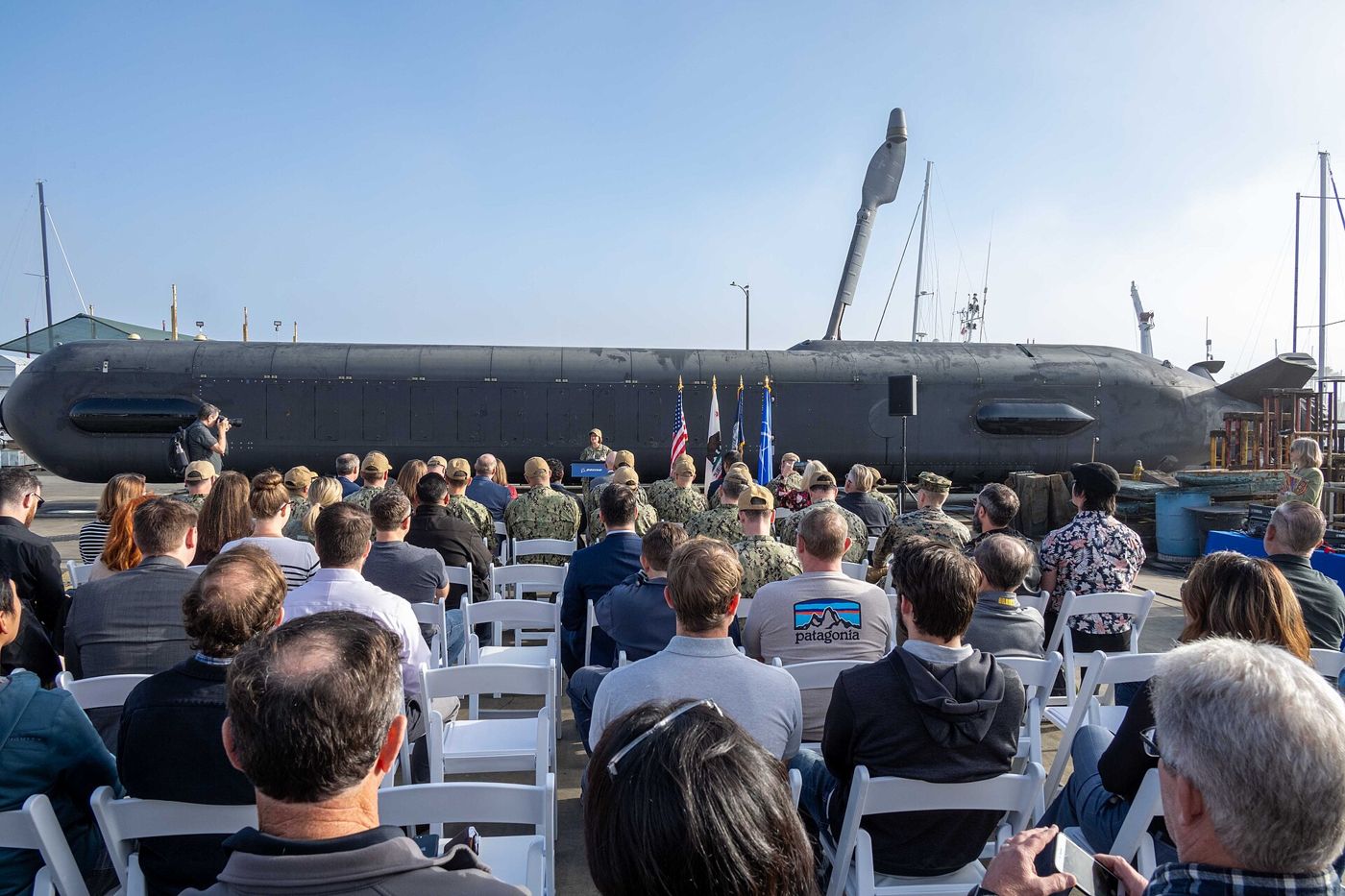
In July 2026 an Orca extra-large uncrewed undersea vehicle “completed a transit of over 1,000 nautical miles for the first time,” according to a Pacific Fleet submarine force release dated August 13. The release gave the event one sentence and did not say which vehicle made the run or whether a payload was aboard. The requirement Orca exists to meet was validated in January 2015, when the Navy identified advanced mining as a Joint Emergent Operational Need, a category that Defense Department guidance says should generally be addressed within two years.
Eleven and a half years separate those two dates. Orca is late and expensive mainly because the Navy treated an operational system as a research project, which excused it from the reviews that would have revealed how much of the vehicle still had to be invented. The service is now preparing to buy more of them, and the record of the first five is the best guide to what speed costs when the checks are left out.
An urgent need run as a research project
The Government Accountability Office laid out the structure in a September 2022 report. In fiscal 2017 the Navy chose the XLUUV as its answer to the mining need and planned to buy up to five as a research and development effort. In February and March 2019 it selected Boeing to build all five under a fixed-price incentive arrangement, with the first due in December 2020 and the last by the end of 2022. The Navy called the vehicles prototypes while planning to use them operationally. Because the effort sat outside the formal acquisition pathways, senior officials told GAO that the associated guidance did not apply.
Two consequences followed. No production readiness review was held, and GAO wrote that the contractor did not demonstrate its readiness to fabricate “because it was not required to do so.” The Navy also never built a business case showing that a two-year delivery was achievable. Orca was derived from Boeing’s Echo Voyager demonstrator, and the differences turned out to be large. The battery had to be redesigned after the original vendor declined to continue into production. The pressure vessels needed a different material, and the payload module was reworked for mine handling. GAO found that the full effect of those changes was not identified until fabrication was under way.
By the time of that report the estimate had grown from $379 million in 2016 to $621 million, an increase of $242 million or 64 percent, including a $73 million test vehicle added to give the Navy something to work with while it waited. GAO’s summary was blunt: seven years after the need was identified, the Navy did “not have a single XLUUV that meets its requirements.” The Navy agreed to hold a readiness review before any further purchase and to produce complete cost and schedule estimates.
What has been delivered and what has been shown
Boeing delivered the test vehicle on December 20, 2023. GAO had already noted that this unit lacked the planned battery and the payload module, so it could not represent the mission system. In June 2025 GAO reported, as Breaking Defense summarized it, that about $885 million had been spent, that autonomy, battery endurance and navigation still presented technical challenges, and that it was “unclear” whether Orca would become a program of record. The same assessment said payload changes would require paying the contractor to modify proprietary software.
GAO’s July 2026 assessment, as reported by Breaking Defense, said the first contracted prototype arrived in September 2025 and the remaining four are expected in January 2027. Naval News reported in March 2026 that a second full-size vehicle, XLE2, had been handed over, which does not match GAO’s count exactly. Either way, the demonstrated achievement as of this month is a single long transit, about a sixth of the 6,500 nautical miles advertised for Echo Voyager. No public source reviewed for this article shows Orca laying a mine.
The next sixteen should not repeat the first five
The Navy’s own position has swung in the past year. Defense Daily reported in November 2025 that a draft memo dated October 27, written for the new robotic and autonomous systems acquisition office, called for canceling Orca and redirecting its funding “due to underperformance.” Six months later the service’s fiscal 2027 plan, as described by Naval News, funded two XLUUVs in 2027 for $135.8 million and 16 across the five-year program for $1.13 billion. The sources reviewed here do not explain the reversal. Congress had already signaled doubt: the Senate Armed Services Committee’s report on the fiscal 2025 defense bill recommended requiring a competitive demonstration of extra-large undersea vehicles, including commercial and foreign designs, to inform the acquisition strategy before a production buy.
That is the right instinct, and it should be applied before any of the 16 are put on contract. The readiness review the Navy agreed to in 2022 should be completed and its results given to the defense committees. A cost and schedule estimate for the production vehicle should exist before the first award. The contract should give the government the interface data needed to integrate payloads without returning to the vehicle builder for each change. And the mine-laying mission that justified the program should be demonstrated at sea on a prototype before quantity is committed. Managers of other large undersea vehicle efforts should read the Orca history as a warning about labels. Calling a system a prototype removed the paperwork, but the engineering questions that paperwork exists to ask were still there, and they were answered later at a higher price.
This analysis draws on the public sources linked in the text. Send corrections to [email protected].