On April 6, 2026, a General Atomics YFQ-42A prototype crashed shortly after takeoff from the company’s airfield in the California desert. Nobody was hurt and the aircraft was a total loss. Nothing in the public account points to the structure or the engine. The company’s safety review traced the mishap to an autopilot miscalculation of the aircraft’s weight and center of gravity. The remedy was a software change, endorsed by Air Force and company technical authorities, and the type was flying again on May 21. Four weeks later the Air Force ordered it into production.
That sequence says more about the Collaborative Combat Aircraft program than any first-flight photograph. The airframe is the part of an uncrewed combat aircraft that can be rolled out, designated and counted. Whether it becomes a usable capability depends at least as much on things that cannot be photographed: the mission-autonomy software, the interface through which a pilot or operator tasks it, the test evidence behind each behavior, and the process by which new software is approved once aircraft are in squadrons. Reporting and oversight that stop at the airframe will misjudge how ready these systems are.
What the 2025 first flights did not show
The YFQ-42A began flight tests in August 2025 and Anduril’s YFQ-44A followed in October, as DefenseScoop’s timeline records. Both events were reported as the arrival of the autonomous wingman. Yet the Air Force did not even name the companies that would supply the mission autonomy until September 23, 2025, when it paired RTX with the General Atomics aircraft and Shield AI with Anduril’s. An Anduril executive said at the time that there was “a little bit more on the software development side” to finish before its aircraft flew.
The software that is supposed to make these aircraft collaborative reached them months later. General Atomics reported on February 12, 2026, that a YFQ-42A had flown for more than four hours running Collins Aerospace’s Sidekick software, with a human operator activating an autonomy mode and sending commands from a ground station console. Shield AI says its Hivemind software first flew on the YFQ-44A on February 26. So for roughly the first half-year of flight testing, the prototypes were demonstrating that they could fly, take off and land. Those are necessary results. They are a long way from evidence that an aircraft can hold a tactical formation, manage sensors and respond sensibly to a fighter pilot’s tasking.
Three kinds of control hide under one word
“Autonomous” is applied loosely to three different things. A remotely piloted aircraft has a human flying it over a data link. An automated aircraft performs defined functions without stick-and-throttle input, such as the autopilot that failed in April. A system making bounded autonomous decisions chooses among courses of action inside limits a human has set. The CCA program builds this distinction into its architecture. Col. Timothy Helfrich, the Air Force’s portfolio acquisition executive for fighters and advanced aircraft, has described flight autonomy as “just the basic things that make sure that the aircraft flies and it’s safe,” separate from the mission autonomy that acts as the tactical pilot.
Official language shows how much care the terms need. When the Air Force announced on July 15, 2026, that a YFQ-44A had fired an AIM-120 at a digital target over the Mojave, Gen. Dale White said the tests showed CCA can execute the weapon employment sequence “autonomously within pilot-defined parameters.” The same announcement stated that “CCA will not autonomously employ weapons” and that the release decision stays with a human operator. Both statements can be true, but only for a reader who separates automated execution of a sequence from the decision to start it.
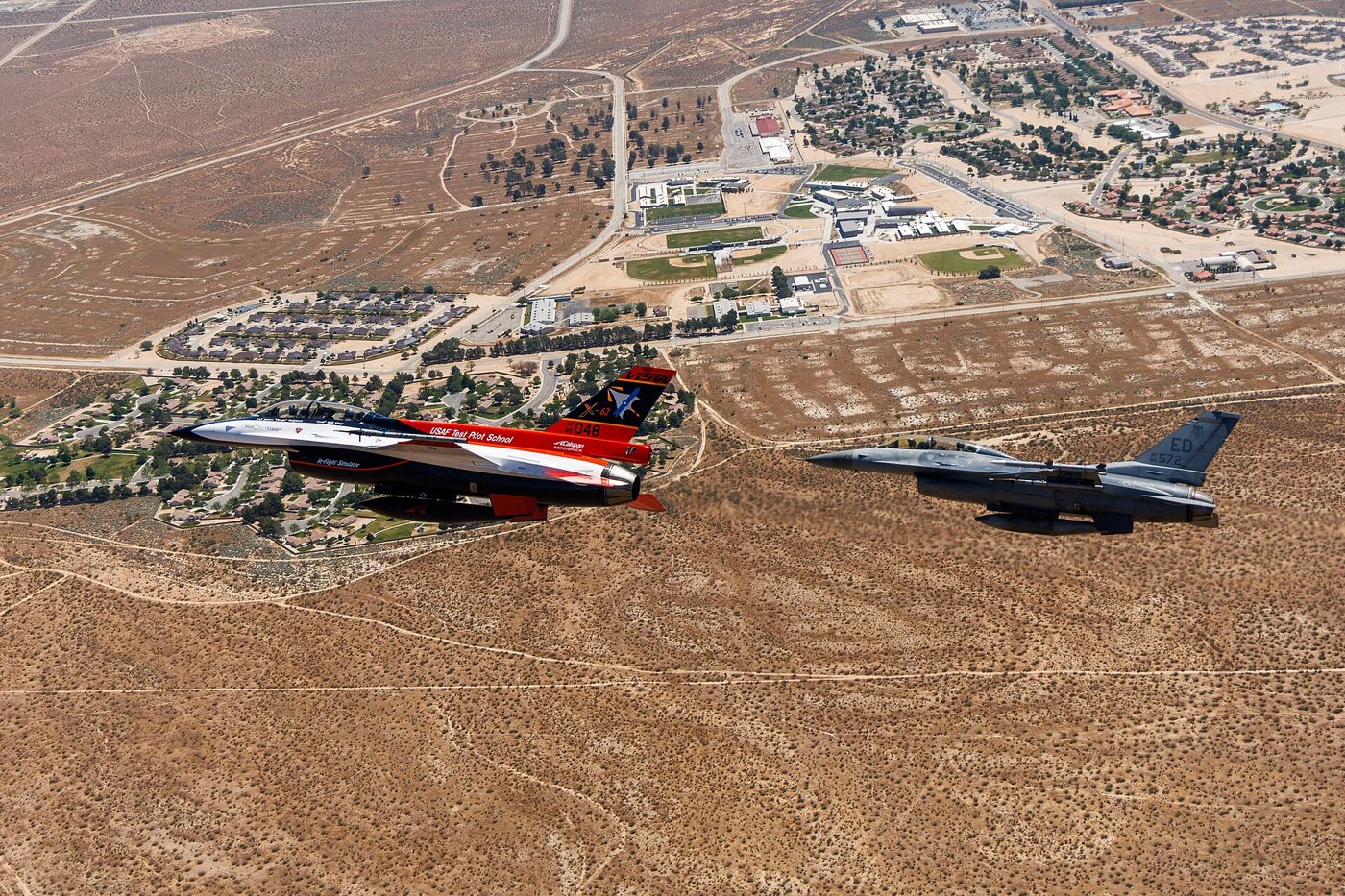
The crewed testbeds deserve the same reading. When Secretary Frank Kendall flew in the X-62A VISTA on May 2, 2024, he engaged the AI agent with a button on the stick for about a dozen within-visual-range setups against a crewed F-16, with a safety pilot behind him. A Shield AI executive said afterward that the agent “wasn’t even built to fly from point A to point B.” The earlier dogfights, flown in September 2023, also carried pilots who could take over, and DARPA’s program manager said the effort was about building trust in AI more than about dogfighting. Project VENOM continues that method: on July 16, 2026, a modified F-16 at Eglin flew under AI control with a pilot aboard who could switch between human and AI control. The Air Force Research Laboratory’s three-hour XQ-58A sortie on July 25, 2023, was presented by the service as proof of “a multi-layer safety framework” for an AI-flown uncrewed jet. These were tests of narrow behaviors inside safety envelopes, and the people who ran them said so.
The software award is the open production decision
The June 17 announcement was reported mostly as a hardware story: both aircraft, now FQ-42A and FQ-44A, go into production, and Secretary Troy Meink said the service intends to buy more than 150 combat-capable CCA by the end of the decade. The software terms matter more for judging readiness. Six companies received places in a six-year mission-autonomy pool. Anduril, RTX Collins Aerospace and Shield AI entered the first of two six-month competitive rounds, and the Air Force plans to name a single primary provider for Increment 1 by summer 2027. Full license fees are tied to delivering capability that reflects operator feedback.
Put plainly, the Air Force has committed to building aircraft about a year before it decides whose software will fly most of them. That is a defensible choice. The Autonomy Government Reference Architecture exists so that mission software can be replaced without reopening the flight-critical code, and Helfrich has argued that it means the service is “not locked into a single solution or single vendor.” In February a YFQ-44A flew test points under Hivemind and then, in the same sortie, switched to Anduril’s own Lattice software. The architecture has been shown to work as plumbing. It also means the tactical behavior of the fielded fleet remains undecided, and a production count says little about it.
Operators need evidence they can read
The human side is further along than headlines suggest, though still early. The Experimental Operations Unit, activated in June 2025, ran YFQ-44A sorties at Edwards in April 2026 with airmen tasking the aircraft from a ruggedized laptop; its commander stressed that the sorties were flown “with a warfighter, not an engineer or test pilot.” A July exercise at Creech had operators assigning tasks from multiple locations and generating daily autonomy sorties. General Atomics said in September that its aircraft has flown under collaborative control of F-22 and F-35 pilots, which is a company statement and should be weighed as one until the Air Force publishes results.
Lt. Gen. Luke Cropsey has put the design problem well: the system has to be deployed so that the “human brain” can “stay wrapped around the decision space.” The former EOU commander wants operators to be able to ask the autonomy after a sortie why it did what it did. Neither is a fielded feature today. The Government Accountability Office, meanwhile, found in December 2025 that Defense Department test policies for the major capability and middle-tier pathways largely lack requirements for iterative testing and recurring user feedback. Those are the practices a regularly updated autonomy stack depends on. The Congressional Research Service already lists the risks and benefits of relying more heavily on autonomy among the CCA questions for Congress.
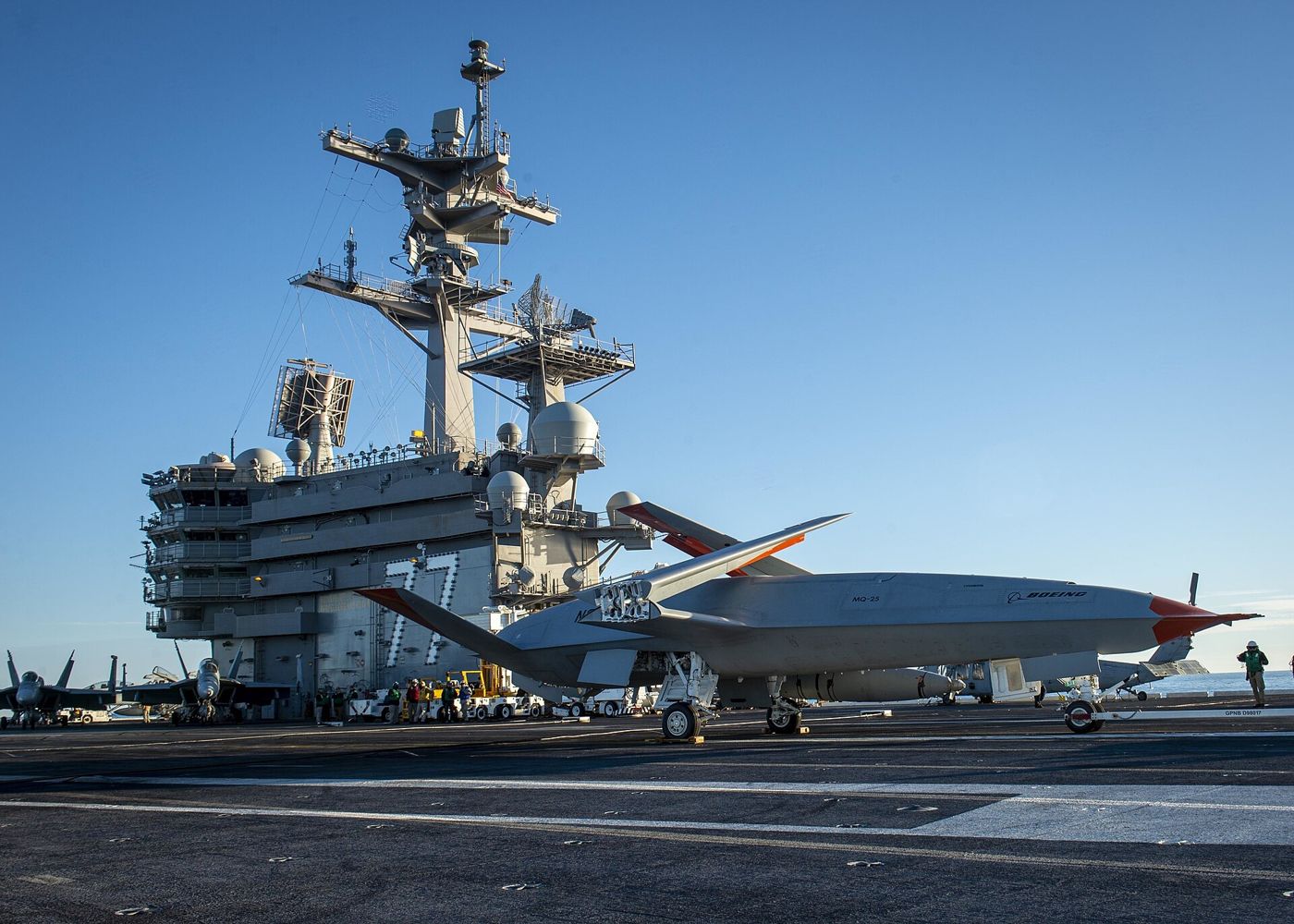
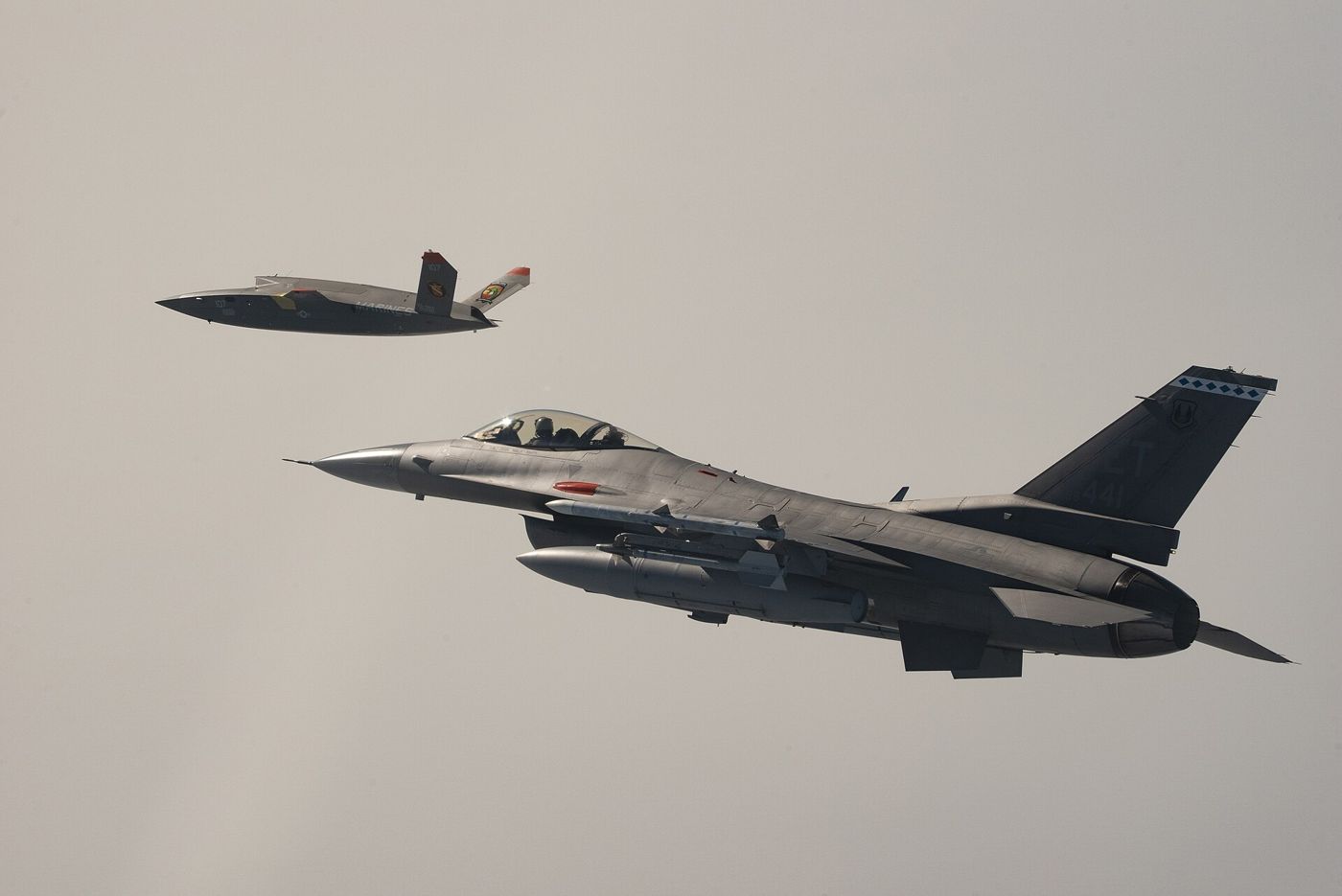
The other services inherit the same issue. The Navy’s August 2026 specifications call for its carrier-based CCA to be operated through the MD-5 mission control system built for the MQ-25, and the Marine Corps is pairing the YFQ-42A with a government-provided mission package. In both cases the interface and the software are being specified apart from the airframe.
Report readiness by software build, not by tail number
The April mishap produced a useful precedent: a named cause, a software fix, and a statement that technical authorities endorsed the change before flight resumed. The program should make that the public standard for mission autonomy as well. Before the first operational unit forms, the Air Force should state who approves a new mission-autonomy release, what regression testing it must pass in simulation and in flight, and how a change of primary vendor in 2027 will be absorbed by units already training on another company’s behaviors. Milestone announcements should name the software build and the control mode, and say which behaviors were tested with a crewed fighter in the loop.
Congress can ask for the same discipline. Delivery schedules for 150 aircraft are easy to track. A companion report that lists validated autonomous behaviors per software release, with the test evidence behind each, would tell the defense committees far more about what a fighter pilot will be able to rely on at the end of the decade.
This analysis draws on the public sources linked in the text. Send corrections to [email protected].